
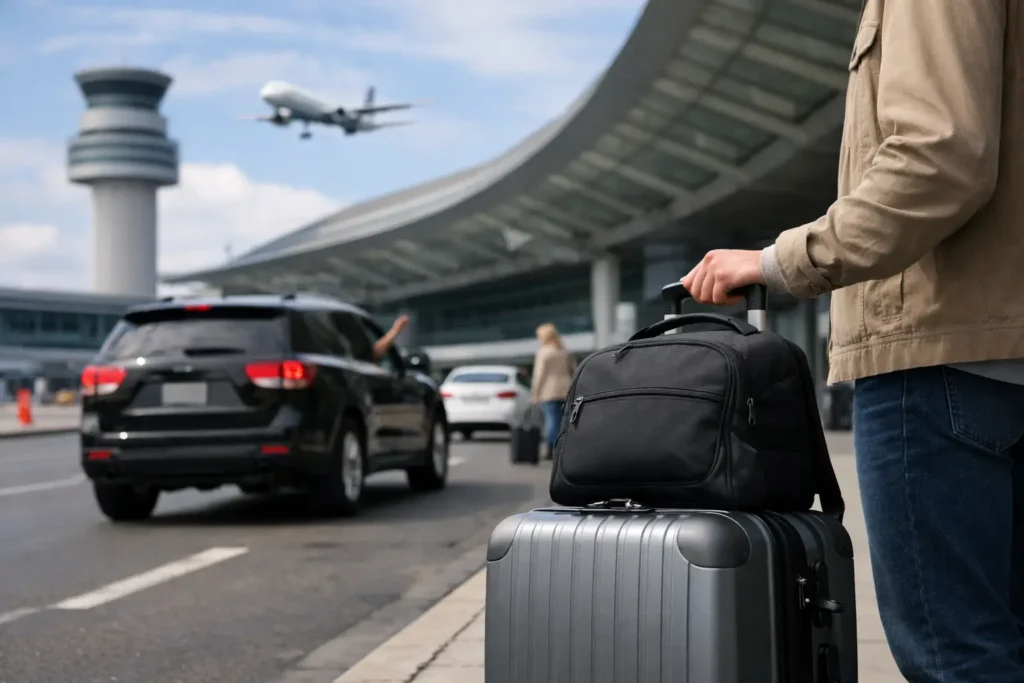
A curbside pickup at Toronto Pearson can take five minutes or turn into a frustrating loop around the terminal. The difference is usually preparation. This Toronto airport curbside pickup guide explains how to coordinate the arrival, choose the right pickup arrangement, and get from baggage claim to your vehicle without standing outside wondering where your driver is.
For travelers arriving after a long flight, families managing several bags, and executives headed straight to a meeting, the goal is simple: know who is picking you up, where you will meet, and what happens if your flight or baggage is delayed.
Know the Difference Between Pickup and Drop-Off
Airport curbs are managed space, not casual parking areas. At Pearson, traffic patterns, terminal access rules, construction, and enforcement can affect where vehicles are allowed to stop and for how long. A driver generally needs to arrive when the passenger is ready, not wait at the curb while the passenger is still inside.
That is why a professional airport pickup should start with a clear communication plan. Your driver should have your flight details, monitor for schedule changes, and confirm the pickup instructions before arrival. You should have a working phone, your flight number, and a realistic sense of how long immigration, baggage claim, and the walk to the exit may take.
Drop-off is usually more straightforward because the passenger leaves the vehicle with luggage and enters the terminal. Pickup is more variable. International arrivals may require more time than domestic arrivals, checked baggage can be delayed, and a busy arrivals roadway can change the best meeting approach.
Before You Land: Set Up the Pickup Properly
The most reliable curbside experience is arranged before the aircraft doors open. Do not rely on a vague message such as “meet me at Pearson.” Your pickup provider needs enough detail to make the right decisions without repeated calls at the terminal.
Provide your airline, flight number, arrival date, passenger name, mobile number, destination, and the number of travelers. Be accurate about luggage as well. Two adults traveling light need a different vehicle than a family with a stroller, ski bags, car seats, and four large suitcases.
If you are booking private transportation, confirm whether the service uses curbside pickup, an in-terminal meeting point, or another designated collection area. The right option depends on terminal conditions, airport rules, the size of your group, and how much assistance you need with bags. Curbside can be efficient for a traveler who can walk out promptly. A meet-and-greet arrangement may be a better choice for first-time visitors, elderly passengers, families with children, or anyone who wants a more guided arrival.
A pre-booked car service also removes two common sources of stress: price uncertainty and vehicle uncertainty. You know the vehicle category, the pickup plan, and the rate before you travel, rather than trying to secure a ride during the busiest part of your day.
What to Do After You Arrive at Pearson
Once the plane lands, resist the urge to message your driver immediately unless your service specifically asks you to. Landing is not the same as being ready for collection. You may still have a long taxi, deplaning delay, customs process, baggage wait, or terminal walk ahead.
Instead, follow the instructions you received from your transportation provider. In most cases, the best time to confirm your readiness is after you have collected all checked bags and are prepared to leave the terminal. This timing lets the chauffeur approach the correct pickup point without circling unnecessarily or arriving too soon.
Before heading outside, check three things: your phone has signal and battery, you have every bag, and you know the terminal exit or meeting instructions. If you are traveling with others, agree on one person who will communicate with the driver. Multiple passengers calling or texting separately can create confusion when traffic is moving quickly.
Follow Terminal Signs, Not Assumptions
Pearson has distinct terminals and clearly marked roadway levels. Follow the signs for arrivals, ground transportation, and the pickup instructions provided to you. Do not assume that every terminal exit leads to the same type of curb access or that a vehicle can stop at every door.
This matters especially when passengers are tired or unfamiliar with the airport. Walking to the wrong exit may sound minor, but it can force the driver to make another pass through a congested roadway. A short wait becomes longer for everyone.
If you cannot locate the correct area, stay inside or in a safe, clearly signed public space while you contact your driver. Do not cross traffic lanes, enter restricted roadway areas, or ask a driver to stop where stopping is not permitted. A professional chauffeur will direct you to the safest workable point based on current airport conditions.
Why Flight Tracking Helps, but Does Not Solve Everything
Flight tracking is one of the most useful tools in airport transportation. It allows a chauffeur to see major changes to your arrival schedule and plan the dispatch accordingly. If your flight is late, the driver can adjust. If it arrives early, the provider has visibility before you call.
But flight tracking does not show when you clear customs, receive your bags, or walk outside. That final update still matters. A good pickup experience combines flight awareness with direct passenger communication.
For international travelers, build extra flexibility into the plan. Customs processing can be quick one day and slow the next. If you are carrying items that require declaration, traveling with children, or arriving during a busy period, avoid promising that you will be at the curb at an exact minute. Tell the driver when you are physically ready instead.
Curbside Pickup Etiquette That Saves Time
Airport pickups work best when everyone keeps the curb clear and communication brief. Your driver needs a quick, legal stop, and you need to be ready to load promptly.
Keep your bags together before you exit. If your group is large, designate one person to watch the luggage while another confirms the vehicle. Look for the vehicle details sent by the service, but do not step into the roadway to search for a car. The chauffeur should be able to identify you and safely pull in when the pickup point is available.
If you are meeting a friend or family member in a personal vehicle, ask them to wait until you are outside and ready before approaching the terminal. They should not park, idle for an extended period, or block active lanes. Pearson’s traffic control staff may direct vehicles to keep moving, particularly during peak arrival times.
A commercial chauffeur is trained to work within these constraints. That operational experience matters. The best airport transportation is not simply a nice vehicle at the curb. It is a driver who understands timing, terminal flow, luggage handling, and how to adjust without making the passenger manage the problem.
Choosing the Right Vehicle for Your Arrival
The wrong vehicle can undermine an otherwise well-planned pickup. A sedan is often ideal for one or two travelers with standard luggage. An SUV provides more cargo room and passenger space. Vans are a practical choice for families, groups, or travelers carrying several large bags.
Do not book based only on passenger count. Consider the actual luggage footprint. Four travelers with four large suitcases may need more room than five travelers carrying only carry-ons. If you have golf clubs, musical instruments, a wheelchair, a stroller, or oversized items, mention them when reserving.
For business travelers, a pre-booked executive vehicle provides a controlled transition from flight to destination. You can make a call, review an itinerary, or simply decompress without dealing with surge pricing, ride cancellations, or uncertainty about whether the vehicle will fit your luggage.
When Curbside Is Not the Best Choice
Curbside pickup is fast when conditions are favorable, but it is not always the best arrangement. If you are traveling with a senior, young children, a large group, or unfamiliar visitors, a more guided pickup method can reduce stress. The same is true if you expect accessibility needs or a large amount of luggage.
There is also a practical trade-off during very busy periods. A driver may need to make an extra pass or use the airport-approved option that best fits the traffic situation. That is not poor service. It is often the safest and most efficient response to a crowded terminal roadway.
With Airline Limo Pearson, the focus is on a confirmed plan rather than a last-minute curbside gamble: flight-aware coordination, a licensed chauffeur, a suitable vehicle, and direct updates when it is time to connect.
Your airport arrival should not end with a dozen unanswered texts and a search through traffic for the right car. Book early, share accurate flight and luggage details, keep your phone available, and wait for your driver’s instructions before heading out. That small amount of planning protects the part of travel most people underestimate: getting home, to the office, or to your next appointment on time.