
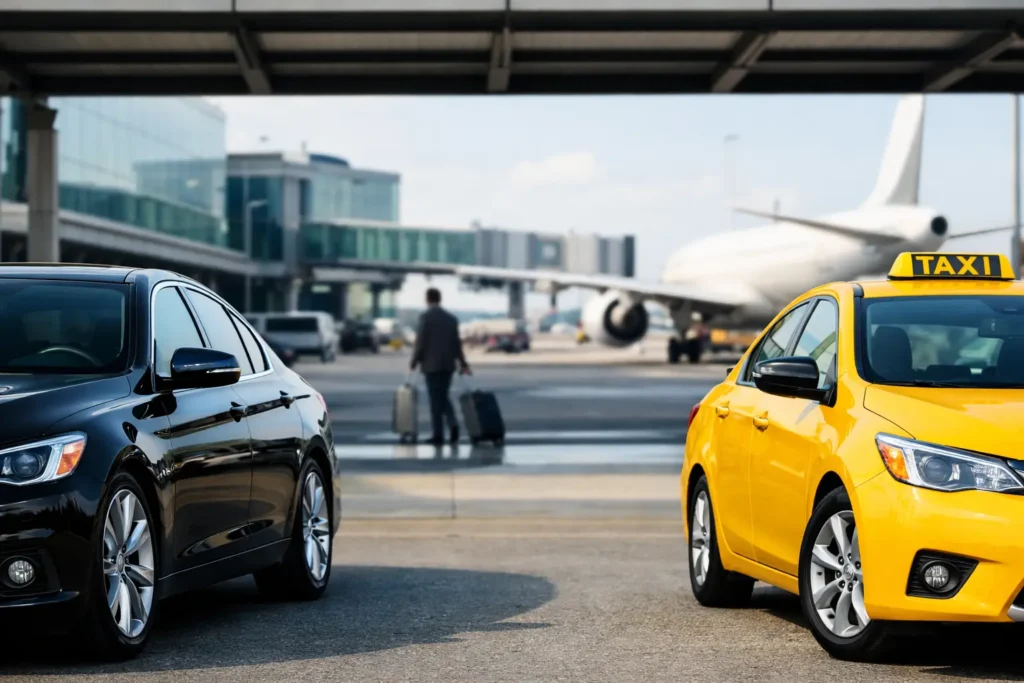
You usually feel the difference between a smooth airport ride and a stressful one before the car even arrives. A driver who is late, hard to reach, or unclear about pricing can turn a simple pickup into a chain reaction of delays. That is why the private car vs taxi decision matters most when the trip actually matters – early flights, business meetings, family travel, and any pickup where timing is not negotiable.
For some rides, a taxi is perfectly fine. If you need a quick trip across town and you are not carrying much, hailing one can be convenient. But airport transportation is a different category. It involves timing, luggage, terminal access, traffic judgment, and the very real cost of being late. When the ride is tied to a flight, a client meeting, or a planned event, the better question is not simply which option is cheaper. It is which option gives you the most control.
Private car vs taxi: what is the real difference?
On the surface, both services take you from one place to another. The difference is in how the ride is managed.
A taxi is typically an on-demand service. You request it when you need it, and the experience can vary from one ride to the next. The vehicle, the driver, the route quality, and even the pickup process may change every time. That flexibility can be useful, but it also means inconsistency is built into the model.
A private car service is reservation-based. The ride is scheduled in advance, the pickup details are confirmed, and the service is designed around the trip rather than improvised at the curb. For airport travel, that structure matters. It reduces guesswork, gives passengers a clear plan, and removes the need to scramble when time is tight.
This is why many frequent travelers stop comparing private car vs taxi as a simple side-by-side on price alone. They start looking at reliability, communication, and whether the service is built for important trips.
Reliability is where the gap gets wider
Airport rides fail in predictable ways. The driver is late. The car is not where it should be. The fare changes. The passenger has trouble making contact. None of those problems sound dramatic until they happen at 4:30 a.m. with luggage in hand and a departure time approaching.
A taxi can work well when supply is strong and timing is flexible. But if you are traveling during peak demand, bad weather, early morning hours, or a major holiday window, availability becomes part of the risk. Even when a taxi arrives on time, there is still the question of whether the driver understands the airport flow, the correct terminal access point, and how much buffer is actually needed.
A professional private car service is built to remove those variables. The trip is booked ahead. Pickup instructions are set before the day of travel. In many cases, flight monitoring, direct communication, and fixed dispatch processes are part of the service. That does not just feel more organized. It is more organized.
For business travelers, reliability protects the schedule. For families, it protects the mood of the entire trip. For older passengers or anyone traveling with multiple bags, it also protects energy. No one wants to start a travel day by solving transportation problems on the curb.
Why airport pickups are different from regular city rides
A city ride is usually simple. One address, one destination, and no hard deadline beyond general convenience. Airport pickups are more demanding. Flights change. Arrivals shift. Terminals matter. Luggage matters. Meeting points matter.
That is where an experienced private car service tends to outperform a standard taxi experience. The driver is not just showing up with a meter running. The service is expected to understand airport operations, pickup procedures, and how to adjust when travel plans move.
Cost is not as simple as the base fare
Price is often the first thing people compare, and it should be. But base fare alone rarely tells the full story.
A taxi may look less expensive at first glance, especially for a short trip. But airport rides often involve traffic, route changes, wait time, and unpredictable trip duration. Metered pricing can rise quickly when the road conditions are working against you. If the trip is longer than expected, so is the fare.
A private car service usually works on fixed pricing. That gives passengers clarity before the ride begins. You know what the trip costs, and you can plan around it. For travelers heading to Pearson or booking regional airport transportation from places like Pickering, Whitby, Ajax, or Hamilton, that certainty is often worth more than chasing the lowest possible starting number.
There is also the cost of a bad ride to consider. Missing a flight, arriving flustered to a meeting, or dealing with confusion after landing has a real price, even if it does not show up on a receipt. Time, stress, and disruption count.
Comfort matters more when the ride is longer
Not every trip needs a premium vehicle. If you are crossing a few blocks, comfort is probably not the deciding factor. But airport transportation often means longer rides, early departures, or travel after a long flight. In those moments, vehicle quality matters.
Taxis can vary widely. One ride may be clean and quiet, while the next feels worn, cramped, or poorly suited for luggage. That inconsistency is one of the main drawbacks. You do not always know what is arriving until it pulls up.
With a private car service, the experience is more controlled. Vehicle class, space, and capacity are usually part of the booking process. That matters for solo executives who need a quiet ride, families traveling with strollers and suitcases, or groups that do not want to split into multiple cars.
Comfort is not about showing off. It is about having the right vehicle for the trip and arriving in a better state than when you left.
Safety and professionalism are part of the value
Passengers often focus on convenience first and think about safety second. In reality, the two are tied together.
A professionally operated private car service typically emphasizes licensed and insured chauffeurs, maintained vehicles, and clear operating standards. That structure creates accountability. It also creates a more predictable passenger experience, which is exactly what people want when they are traveling at odd hours, riding with family, or arranging transportation for a client or executive.
Taxi service is regulated too, but the level of professionalism can still vary ride to ride. Some drivers are excellent. Some are rushed, distracted, or less familiar with the expectations of airport passengers. The issue is not that taxis are inherently unsafe. It is that the experience is less standardized.
For travelers who value control, professionalism is not a luxury add-on. It is the reason they book in advance.
When a taxi makes sense
There are situations where a taxi is the practical choice. If you need a ride right now, your destination is nearby, and your schedule has some flexibility, a taxi can be efficient. It is also a reasonable option when you are traveling light and do not care much about vehicle type or service consistency.
That matters because not every ride needs the same level of planning. Being honest about that makes the comparison more useful.
But once the ride involves an airport, a long-distance transfer, a time-sensitive appointment, or multiple passengers, the limits of a taxi become more noticeable. The more important the trip, the less most travelers want to leave to chance.
When a private car is the better call
A private car is usually the stronger choice when the schedule matters, the destination matters, or the passenger experience matters.
That includes airport departures where lateness is unacceptable, airport arrivals where no one wants to stand outside trying to locate a car, and business trips where the ride should feel like part of a professional plan. It also includes family travel, especially when there are children, extra luggage, or older relatives involved.
For special events, the case is even stronger. Weddings, proms, and formal nights out are not moments where people want curbside uncertainty or vehicle roulette. A reserved car with a professional chauffeur fits the occasion because it removes friction.
This is the lane where companies like Airline Limo Pearson have built their value – not by promising vague luxury, but by delivering a ride that is booked, confirmed, tracked, and handled properly from start to finish.
The better question is what kind of trip you are protecting
Private car vs taxi is not really a debate about transportation categories. It is a decision about risk tolerance.
If the ride is casual, flexible, and low stakes, a taxi may do the job just fine. If the ride is tied to a flight, a meeting, a family itinerary, or a once-a-year event, the safer choice is usually the one built around precision. Pre-booked service, clear pricing, professional communication, and a vehicle that matches the trip are not extras when the trip matters. They are the point.
The right ride should let you focus on where you are going, not on whether your transportation will hold together.