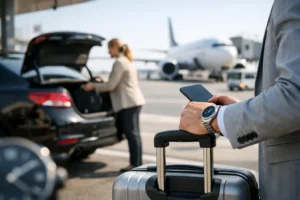
You land after a delay, turn your phone back on, and wonder whether your driver gave up and left. That question is exactly why people ask how flight tracking pickups work. If the service is run properly, your chauffeur is not guessing. The pickup plan is tied to your live flight status, so timing adjusts as your arrival changes.
For airport travelers, that matters more than people realize. A pickup is not just a car showing up near the terminal. It is a chain of timing decisions based on departure updates, air traffic delays, gate arrival, baggage timing, airport traffic, and where the driver can legally wait. When those details are managed well, your arrival feels organized instead of chaotic.
How flight tracking pickups work in real time
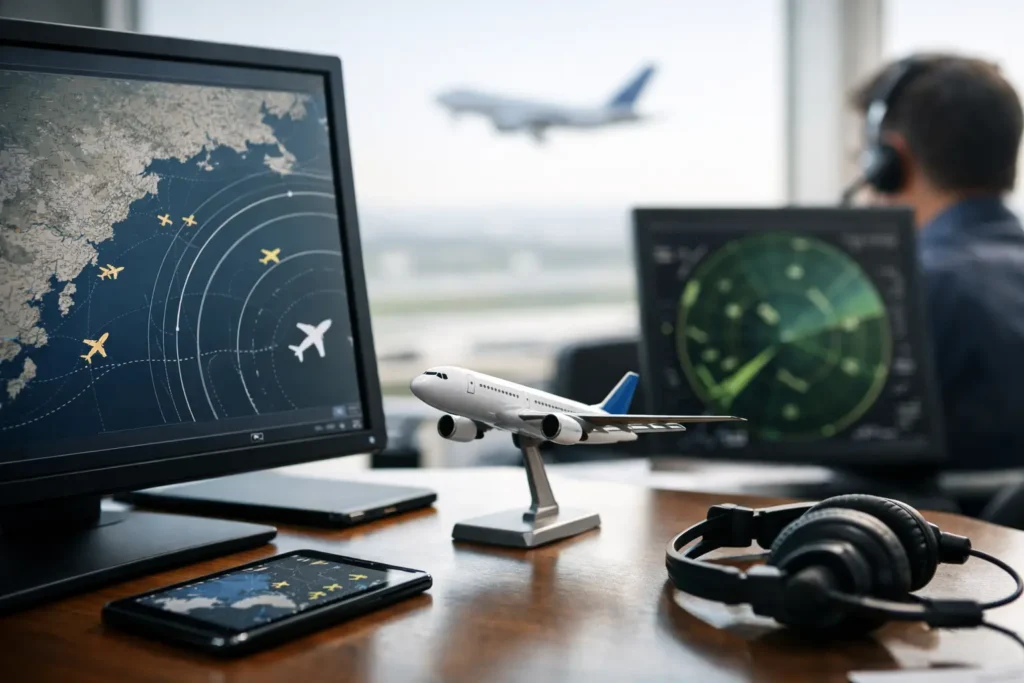
At the simplest level, flight tracking means your transportation company monitors your inbound flight and updates your pickup timing based on the latest status. That sounds straightforward, but the real value is in what happens behind the scenes.
When you book, you provide your airline, flight number, date, and arrival airport. That information gives the dispatcher a specific flight to monitor, not just a rough landing window. If your plane leaves late, circles before landing, or arrives ahead of schedule, the operations team can see that and adjust the driver’s dispatch timing.
A professional airport car service does not treat your original booking time as fixed if your flight is moving. The point of flight tracking is to reduce the chance of two bad outcomes: a driver arriving too early and leaving, or a passenger landing to find no car ready.
That said, flight tracking is not magic. It helps coordinate the driver with your flight, but pickup timing still depends on what happens after touchdown. Deplaning can take ten minutes or thirty. Checked bags can appear quickly or take longer than expected. International arrivals may face customs lines that change by the hour. A good service accounts for that reality instead of pretending every arrival works the same way.
What your chauffeur and dispatcher are actually watching
Most passengers think the only important moment is landing. In practice, several milestones matter.
The first is the updated estimated arrival time. If the flight is delayed before takeoff or while in the air, dispatch can shift the pickup plan before the aircraft reaches the airport. That protects you from paying the price for airline delays in the form of confusion or missed coordination.
The second is the actual landing time. This confirms the plane is on the ground, but it still does not mean you are ready at the curb. Taxi time to the gate can add minutes. Busy airports can stretch that window.
The third is terminal and gate context. Experienced airport transportation companies know that terminal layout changes the pickup process. Some terminals move faster than others. Some pickup areas are more congested. At a major airport like Pearson, airport familiarity makes a real difference because not every delay happens in the air. Plenty happen after landing.
The fourth is passenger communication. Real-time flight data is useful, but it works best when paired with text updates and clear pickup instructions. If you know where to go, who your driver is, and when to expect the vehicle, the process feels controlled from the start.
Why flight tracking is different from a standard scheduled pickup
A normal city pickup is built around a fixed address and a fixed time. Airport arrivals are different because the passenger is moving through an unpredictable process controlled by the airline and the airport.
Without flight tracking, your driver would have to rely on the original reservation time no matter what happened to your plane. If your flight lands an hour late, that creates obvious problems. Either the vehicle arrives too soon and waits inefficiently, or the timing falls apart and you end up calling from the terminal trying to rebuild the pickup from scratch.
With flight tracking, the service operates around actual conditions rather than hopeful assumptions. That is especially valuable for business travelers with tight schedules, families traveling with children and luggage, and anyone arriving late at night who does not want to negotiate transportation after a long flight.
This is one reason premium airport car service feels different from app-based rides. You are not entering a request after landing and hoping the next available driver understands the terminal setup. The trip is planned in advance, then adjusted in real time.
Where flight tracking helps most – and where people misunderstand it
Flight tracking is most useful when the flight schedule changes meaningfully. Delays, early arrivals, missed connections, and rolling arrival updates are where it earns its keep. It also helps when airport traffic is heavy and dispatch needs to time the driver’s approach instead of sending the vehicle in too early.
The common misunderstanding is assuming that flight tracking alone covers every airport variable. It does not. If you take forty minutes to collect bags, stop for food, or stay inside the terminal while your phone is off, the driver may still need updates from you. Tracking tells the company what your plane is doing. It does not always tell them what you are doing after arrival.
That is why the strongest pickup systems combine three things: live flight monitoring, dispatcher oversight, and direct passenger communication. Remove any one of those, and the process becomes less reliable.
How pickup timing is usually handled after landing
Most professional services do not send the driver to the curb the second wheels touch down. That would create unnecessary waiting and airport circulation problems. Instead, timing is built around a more realistic sequence.
For domestic arrivals with no checked bags, the pickup may be prepared quite quickly because the passenger can exit faster. For travelers with checked luggage, larger groups, or international arrivals, the timing usually includes more buffer. A smart dispatcher considers those patterns rather than treating every flight the same.
This is also why fixed-rate, reservation-based service can be more comfortable for travelers. The focus is on controlled execution, not on scrambling to place a car at the curb and then charging unpredictably for every minute the airport process takes.
How chauffeurs are positioned for airport arrivals
A trained chauffeur is not just waiting randomly nearby. The vehicle is usually dispatched based on your updated arrival, expected terminal flow, and airport rules about staging and pickup zones.
At busy airports, drivers often cannot simply park at the curb and sit there. They may need to wait in designated areas until the timing is right, then move in once the passenger is close to the pickup point. That is one reason professional communication matters so much. A text confirming that you have collected your luggage or are walking out can help the driver approach at the right moment.
For travelers using a service like Airline Limo Pearson, the advantage is not just the tracking itself. It is the operational discipline around it. A monitored flight, a licensed chauffeur, fixed pricing, and clear updates work together. That combination removes the usual airport question marks.
What passengers should provide when booking
If you want flight tracking to work properly, the booking details need to be accurate. The flight number matters more than a general airline name or a rough landing time. A wrong digit can point dispatch to the wrong flight entirely.
It also helps to provide a working mobile number and note whether you are traveling with checked bags, children, extra luggage, or a larger group. Those details affect vehicle selection and pickup timing. If your plans change mid-trip, sending a quick message is better than assuming the system knows everything.
There is also an it depends factor with connecting flights. If your reservation is tied to the final inbound segment, tracking usually works well. If the wrong segment is entered, timing can break down. That is not a failure of the concept. It is usually a data issue.
Why this matters for travelers who care about reliability
Airport transportation is one of those services where the difference between average and professional shows up fast. If the ride is late, unclear, or disorganized, you feel it immediately. If it is handled properly, you barely think about it because everything moves the way it should.
That is the real purpose behind flight-aware pickups. They reduce the handoff problems that make airport arrivals stressful. No standing on a curb wondering if the driver saw the delay. No last-minute rebooking because your flight landed off schedule. No guessing which pickup lane makes sense.
For travelers coming into Toronto, heading home to Pickering, Ajax, Whitby, or farther out toward Peterborough or Hamilton, that reliability matters even more after a long flight. The ride is the final leg of the trip. It should not be the most uncertain part.
A good airport pickup does not depend on luck. It depends on timing, monitoring, and communication done well. When all three are in place, flight tracking feels less like a feature and more like what airport transportation should have been all along.