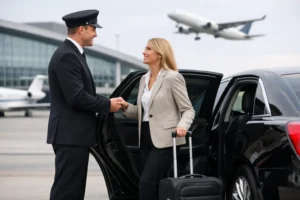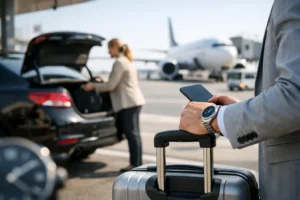
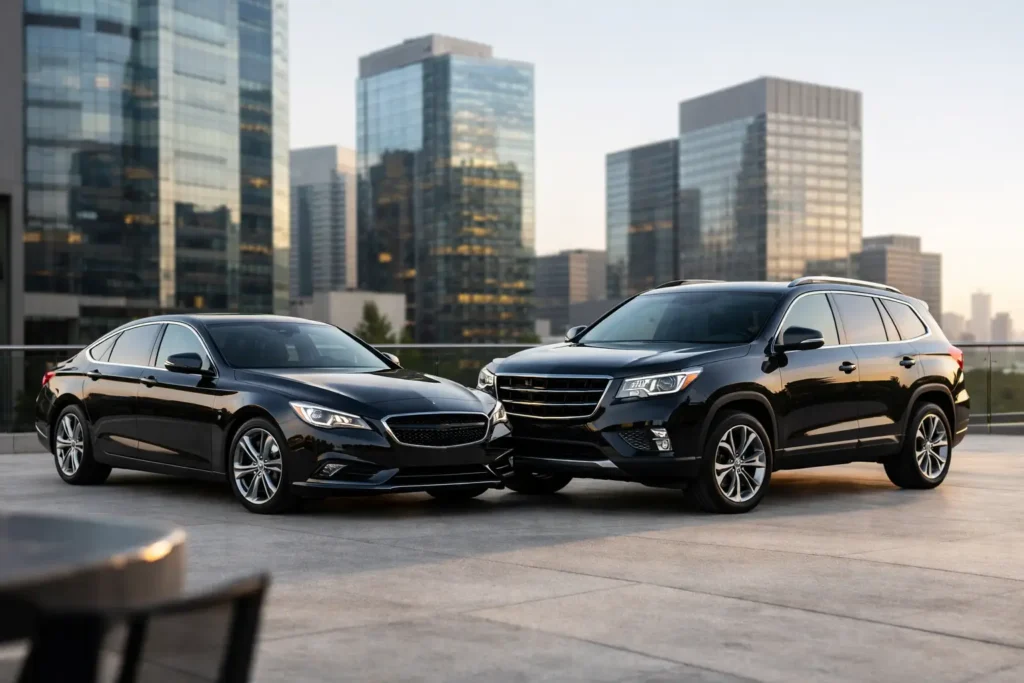
A 6:00 a.m. Pearson departure leaves little room for guesswork. The vehicle you choose affects more than comfort: it determines whether every bag fits, whether clients can work in peace, and whether your group arrives calm instead of cramped. When deciding between an executive sedan or SUV, the right answer comes down to passenger count, luggage, itinerary, and the kind of arrival you need.
A private car service should remove decisions at the curb, not create them. With a pre-booked chauffeur, fixed pricing, and a vehicle selected for your trip, there is no hunting for a larger ride after the app assigns the wrong car and no last-minute surprise when the trunk will not close.
Executive Sedan or SUV: Start With the Trip
An executive sedan is often the best choice for one to three passengers traveling with standard luggage. It is refined, quiet, easy to enter and exit, and well suited to business travel. For an executive heading from Toronto to Pearson Airport, a sedan provides the privacy to review notes, take a call, or simply settle in before a flight.
An executive SUV is built for trips that demand more room. It can accommodate more passengers, larger suitcases, carry-ons, presentation materials, sports equipment, or the extra bags that come with family travel. It also gives passengers a higher seating position and more personal space, which matters on longer drives from places such as Hamilton, Peterborough, or Bowmanville.
Neither vehicle is automatically more luxurious. Luxury is having the right vehicle arrive on time, clean and ready, with enough room for everyone and everything you need to bring.
Choose a Sedan When Privacy and Efficiency Matter Most
For solo travelers, couples, and small corporate groups, an executive sedan keeps the trip focused. The cabin is designed for a composed, professional ride rather than maximum capacity. That makes it a natural fit for airport transfers, downtown meetings, dinners, and events where arrival presentation matters.
Sedans also work well when luggage is predictable. A traveler with one checked suitcase and a carry-on will usually have more than enough space. Two passengers with normal travel bags are also typically comfortable. If you are traveling light, choosing a larger vehicle simply for the sake of it may not add meaningful value.
There is a practical benefit at busy terminals, hotels, and office towers too. A sedan is easy to maneuver through congested pickup areas. Your chauffeur can meet the vehicle access requirements, load the bags, and keep the departure moving without unnecessary delay.
For executives, the quieter environment can be the deciding factor. You may need to make a confidential call before a meeting, prepare for a presentation, or decompress after a long flight. A chauffeur-driven sedan creates a controlled space that a shared shuttle or unpredictable rideshare cannot promise.
Choose an SUV When Space Prevents Problems
The SUV decision is less about excess and more about planning ahead. If three adults each have a large checked bag, a sedan may become restrictive even if the passenger count appears manageable. Add winter coats, laptop bags, garment bags, or souvenirs from a long trip, and trunk space disappears quickly.
An executive SUV is the safer choice for families. Parents can keep children, car seats, strollers, and luggage together without trying to force a complicated packing arrangement. It also makes airport travel more comfortable when passengers have different energy levels after an overnight flight. Everyone has room to sit without feeling boxed in.
SUVs are equally useful for small teams. A group of colleagues traveling to a conference may have carry-ons, equipment cases, display materials, or enough luggage to make capacity the priority. Booking one appropriately sized SUV is often more efficient than splitting a group into separate vehicles and coordinating two arrival times.
Weather can be a factor as well. Southern Ontario winters bring snow, slush, and difficult curb conditions. A professionally maintained SUV can offer added confidence for longer airport trips, especially when road conditions are less than ideal. It does not replace careful driving, but it gives your chauffeur and passengers a vehicle designed for more demanding conditions.
The Luggage Question Is Usually the Deciding Factor
Passengers often count seats and forget to count bags. That is where a good airport transfer plan can fail. Four passengers might technically fit in an SUV, but the booking should also account for four large suitcases, carry-ons, personal bags, and any specialty items.
Before reserving, consider the full load: checked bags, cabin bags, strollers, golf clubs, ski equipment, garment bags, boxes, and mobility aids. If you are returning from an extended trip, leave room for purchases and gifts as well. It is better to book the vehicle with extra capacity than to discover at pickup that a suitcase must sit in the passenger cabin.
If you are uncertain, describe your luggage during the reservation. A professional car service can recommend the appropriate vehicle instead of leaving the decision to an automated category label. At Airline Limo Pearson, this kind of advance planning helps ensure the chauffeur arrives with a vehicle that fits the actual trip, not just the number of people on the booking.
Consider the People, Not Just the Seats
Passenger comfort is not only about how many people a vehicle can carry. Consider who is traveling and how long the drive will be.
A sedan is excellent for a senior executive traveling alone or with one colleague. It feels private, polished, and efficient. For three adults on a short drive with light bags, it can also work very well.
An SUV becomes the stronger option when passengers need more room to move, when one person has limited mobility, or when the drive is longer. Families with children usually appreciate the flexibility. So do travelers arriving after an international flight, when personal space can make the ride home feel much easier.
For special occasions, think about attire. Wedding guests in formal clothing, prom groups, or travelers carrying dresses and suits may benefit from an SUV’s added room. The goal is to arrive looking prepared, not wrinkled after an uncomfortable ride.
Airport Timing Changes the Calculation
For a simple midday ride to the airport, either vehicle can be a straightforward choice. Early-morning departures, peak business hours, snowstorms, and international arrivals require more careful planning.
When timing is critical, avoid booking based on the minimum possible capacity. If you have a group, extra luggage, or a long-distance pickup, an SUV gives the trip more margin for comfort and organization. Your chauffeur can load bags efficiently and keep the cabin clear, helping the ride start on schedule.
The same applies to airport arrivals. After baggage claim, travelers do not want to stand on a curb debating whether everything will fit. Flight-aware pickup, clear SMS updates, and a correctly sized vehicle create a much calmer final step in the journey.
Price Matters, but Value Is the Better Comparison
An executive SUV generally costs more than a sedan because it offers greater capacity and flexibility. That difference may be unnecessary for a solo traveler with one bag. But for a family of four or a team with luggage, the SUV can be the better value because it avoids the need for a second vehicle or a stressful packing compromise.
The more useful question is not, “Which vehicle is cheapest?” It is, “Which vehicle protects this trip from avoidable problems?” A fixed-rate reservation makes that decision easier. You know what you are booking before pickup, rather than watching a fare change while traffic, demand, or route conditions shift.
A Simple Way to Choose Before You Book
Book an executive sedan when you have up to three passengers, standard luggage, and want a quiet, professional setting. Book an executive SUV when you have a larger party, substantial luggage, children, specialty items, a longer drive, or simply want more room.
If the trip sits between those two choices, lean toward capacity. The additional space is rarely regretted, particularly on an airport run where timing, luggage, and comfort all matter at once. The best ride is the one that lets you close the door, trust the plan, and focus on where you are going.