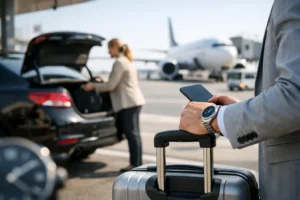
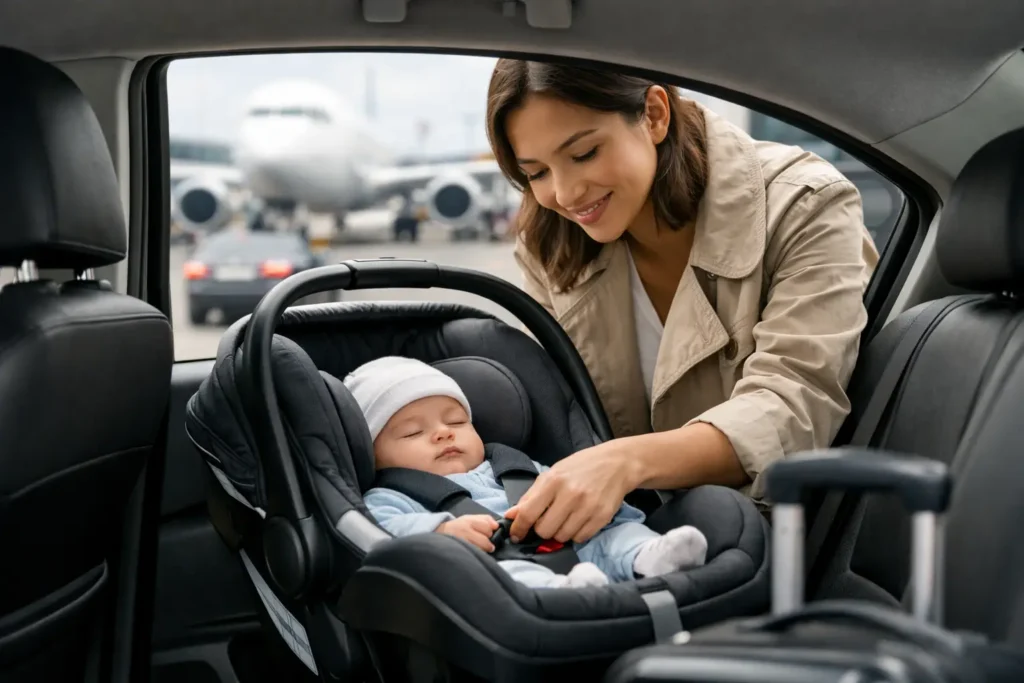
A 5:30 a.m. airport pickup is not the time to discover that the vehicle has no infant seat, the seat is not rear-facing, or the driver cannot wait while you sort out the installation. A cab with infant car seat needs to be planned before travel day, especially when you are heading to Pearson with luggage, a stroller, and a flight schedule that will not move for anyone.
For families, the right ride is not simply the first available vehicle. It is a confirmed reservation with the right child-restraint arrangement, enough space for your gear, and a driver who arrives when promised. That is how you avoid standing on a curb with a baby in your arms and an app still searching for a car.
Why a pre-booked car is better than hoping for a cab
A traditional taxi or on-demand ride may be perfectly adequate for an adult going across town. With an infant, availability becomes the problem. Many vehicles do not carry child seats, and a driver cannot be expected to have the exact seat type, rear-facing configuration, or installation method your baby requires.
A pre-booked airport car service gives you time to state what you need and receive confirmation before the day of travel. You can provide your pickup address, flight details, passenger count, stroller size, and child-seat request in one reservation. The dispatcher can then assign an appropriate vehicle rather than sending whichever car happens to be nearby.
That distinction matters at Pearson Airport. Airport departures have hard deadlines. A late ride, a too-small trunk, or an unexpected child-seat issue can turn a manageable morning into a rushed one. Fixed pickup arrangements and real-time communication create a far more controlled start to the trip.
What to confirm when booking a cab with infant car seat
Do not assume that the phrase “car seat available” answers every question. Infant seats have specific requirements, and every family travels with different equipment. A reliable provider should be able to discuss the request clearly before confirming the reservation.
Ask for the correct seat type
An infant generally needs a rear-facing car seat. Tell the provider your child’s age, weight, and height so the requested seat is appropriate. If your baby is close to the limits of an infant carrier or has transitioned to a convertible seat, say so. The right solution depends on the child, not just the word “infant” on the booking form.
Also ask whether the seat is supplied by the service or whether you should bring your own. Bringing your own familiar seat can give you more control, particularly for very young babies or families who prefer a specific model. The trade-off is carrying it through the airport unless it connects to your stroller or you plan to check it.
Confirm rear-facing installation and seating position
A seat being present in the vehicle is only part of the arrangement. Ask whether it can be installed rear-facing and whether the vehicle has suitable seat belts or lower anchors for the seat being used. The final installation should follow the car-seat manufacturer’s instructions and the vehicle’s instructions.
Parents should also allow a few extra minutes at pickup. Even with a prepared driver and vehicle, a car seat needs to be secured correctly. Do not make a rushed installation part of your airport plan. Booking an earlier pickup is usually a better decision than gambling on a tight schedule.
Choose a vehicle with room for the whole trip
A rear-facing seat takes up more cabin space than many travelers expect. A compact sedan may work for one adult, one baby, and light luggage, but it may be uncomfortable once you add another passenger, a full-size stroller, carry-ons, and checked bags.
For a family of three or four, an SUV or van is often the more practical choice. It gives the infant seat adequate space, keeps luggage out of the passenger area, and leaves room to sit comfortably on the way to the airport. This is especially useful for early flights, when a sleeping baby and a cramped vehicle are a poor combination.
Share flight details, not just a pickup time
Your reservation should include your airline, flight number, departure time, and terminal when known. An airport-focused service can plan the route and pickup timing around the travel details rather than treating the trip like an ordinary local ride.
For an airport arrival, provide the incoming flight number as well. Flight tracking helps the service adjust to delays, while SMS or phone updates help you find your driver after you collect your bags. When you are traveling with an infant, clear instructions are more valuable than wandering between terminal doors looking for a car.
Car-seat safety comes before convenience
Local rules can vary, and certain hired vehicles may be treated differently under provincial regulations than privately owned cars. That does not change the practical safety question: the safest way for an infant to ride is properly restrained in an appropriate rear-facing car seat.
Avoid holding a baby on your lap for a short trip because the car is already waiting. A sudden stop can happen close to home, in airport traffic, or on the highway. Distance does not remove the risk.
Before departure, check that the harness is snug, the chest clip is positioned correctly according to the seat instructions, and the seat is secured without excessive movement at the belt path. Heavy coats should not sit under the harness. If you are unsure about installation, consult the instructions for your own seat or arrange enough time to get help before leaving.
A practical booking checklist for airport families
When reserving transportation, give the service the details that affect safety and comfort. The following information prevents most last-minute surprises:
- Your infant’s age, weight, and height
- Whether you need a rear-facing infant seat or will bring your own
- The number of adults, children, bags, and strollers traveling
- Your flight number, terminal, and preferred pickup time
- A working mobile number for pickup updates
It is also wise to ask about the price before confirming. Airport transportation should come with a clear rate, not surge pricing that changes while you are trying to get out the door. A fixed-rate reservation makes it easier to budget and removes one more uncertainty from family travel.
When bringing your own infant car seat makes sense
Some parents are most comfortable using the seat their baby uses every day. That is a sensible choice when your child has special fit needs, you are traveling with a newborn, or you want to know exactly how the seat has been maintained. It can also simplify your plans after landing if you will need a seat for a rental car or rides in another city.
The downside is logistics. You will need to carry or check the seat at the airport, and you should make sure it is compatible with the booked vehicle. Tell the transportation provider the seat type in advance, particularly if it is a large convertible model. A professional reservation team can recommend a vehicle class with sufficient rear-seat and luggage space.
For families leaving from Toronto, Pickering, Ajax, or Markham, a reservation-based provider such as Airline Limo Pearson gives you a clear channel to document these details before the driver is dispatched. The value is not just a nicer vehicle. It is knowing that the request, route, and timing have been handled before your baby is awake in the back seat.
Plan for the pickup, not just the ride
The best airport car service for a family is one you barely have to think about on travel day. Pack the night before, keep the infant seat accessible if you are bringing it, and be ready a few minutes before the scheduled pickup. If your building has a concierge, elevator delay, or difficult loading area, mention it in the reservation notes.
Traveling with an infant already requires enough attention. Your ground transportation should reduce pressure, with a properly sized vehicle, confirmed child-seat plan, professional driver, and no last-minute surprises at the curb.