
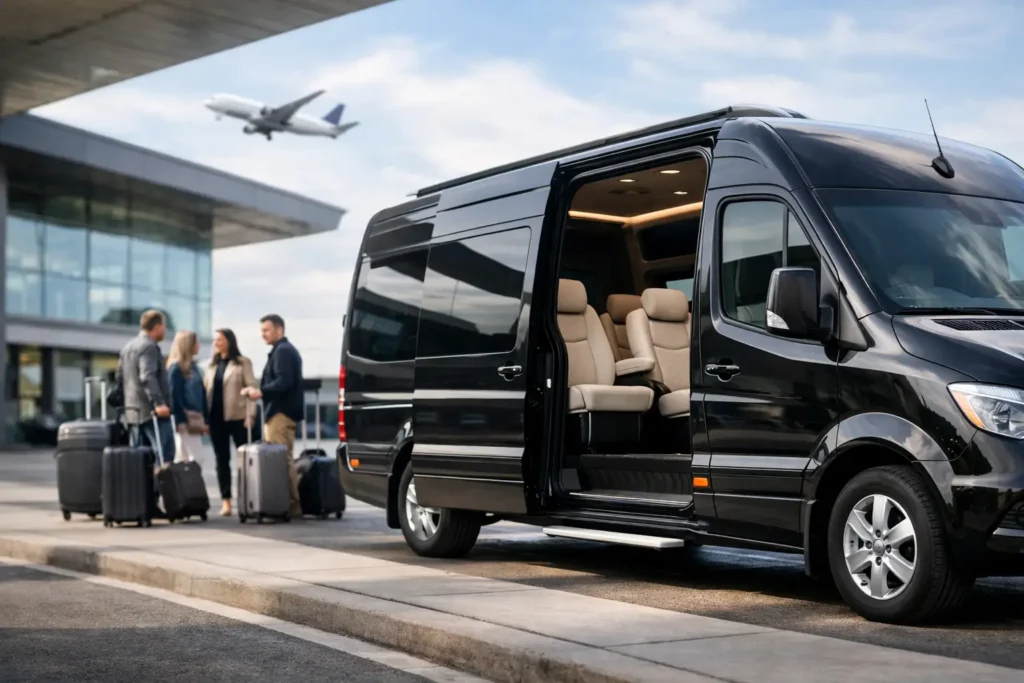
Four travelers, six checked bags, two carry-ons, and a 6:00 a.m. flight can turn a simple airport ride into a packing problem before anyone leaves the driveway. The best vehicle for airport group travel is not necessarily the largest vehicle available. It is the one that fits every passenger, every bag, and the timing of the trip without forcing anyone to sit cramped, split into separate cars, or worry about whether the driver will show up.
For airport travel, the right choice comes down to three practical details: passenger count, luggage volume, and the kind of trip you are taking. A family heading to Pearson for a week away has different needs than four executives carrying laptop bags. A group returning from an international flight may need more room than they did on the way out. Planning around those details prevents the usual curbside scramble.
Start With Luggage, Not Just Seats
A vehicle may technically seat six or seven passengers, but that does not mean it can carry six or seven travelers with full-size luggage comfortably. This is the most common mistake in group airport transportation.
Count each traveler, then count what is actually going into the vehicle. Include checked suitcases, carry-ons, strollers, garment bags, golf clubs, ski equipment, and work samples. If you are traveling during winter, bulky coats and boots also take up more cabin space than people expect. For a return pickup, allow room for anything purchased during the trip.
A professional reservation team should ask about both passengers and bags. That question is not a formality. It is how the correct vehicle is assigned before travel day, rather than after everyone is already standing outside with luggage.
The Best Vehicle for Airport Group Travel by Group Size
One to Three Passengers: Luxury Sedan
A luxury sedan is often the right choice for one to three passengers traveling with standard luggage. It works especially well for business travelers, couples, and small groups with a straightforward airport schedule.
The advantages are easy access, a quiet ride, and a polished arrival. For an executive heading to an early flight or a couple leaving for a weekend trip, a sedan provides comfort without paying for unused space. The trade-off is cargo capacity. Three people with large checked bags can fill the trunk quickly, so be direct about luggage when booking.
Three to Five Passengers: Full-Size SUV
For many airport groups, a full-size SUV is the most balanced option. It gives passengers more space, provides higher cargo capacity than a sedan, and handles family travel well. It is a practical choice for parents with children, travelers carrying several suitcases, and small corporate teams.
An SUV is also useful when a group wants to stay together but does not need the seating capacity of a van. Still, seating configuration matters. A third-row SUV can accommodate more passengers, but the available luggage area may decrease when every seat is in use. Five adults with five large suitcases may be better served by a van, even if the SUV has enough seats on paper.
Five to Seven Passengers: Executive Van or Passenger Van
Once the group reaches five or more travelers, a van becomes the more sensible airport vehicle. It provides proper seating, a dedicated luggage area, and less pressure to stack bags around passengers. This is often the best option for extended families, groups of friends, wedding parties, and corporate teams traveling together.
Keeping the group in one vehicle matters. It allows everyone to leave at the same time, arrive at the correct terminal together, and avoid the risk of one delayed car affecting the whole plan. For airport pickups, it also means one clear meeting point and one driver who knows the flight details.
A van is not only about capacity. It gives people room to settle in after a long flight. That difference is noticeable when travelers are tired, carrying children, or facing a drive from Pearson to locations such as Hamilton, Pickering, or Peterborough.
Seven or More Passengers: Larger Van or Coordinated Vehicles
For larger groups, the choice depends on whether everyone has luggage and how much space each traveler needs. A larger passenger van may keep the group together comfortably. In other cases, two coordinated vehicles are the safer option, particularly when the group has a high volume of bags or special equipment.
Two vehicles should not mean two separate, uncertain bookings. The pickups should be scheduled together, the drivers should have the same flight or departure information, and the group should know exactly where to meet. Coordinated transportation protects the schedule, especially for conferences, destination weddings, and multi-family trips.
Match the Vehicle to the Direction of Travel
The ride to the airport and the ride from the airport can require different planning.
For a departure, the priorities are a timely pickup, enough luggage space, and arriving at the right terminal with time to spare. Your party is usually organized, awake, and carrying only what it packed. A well-planned private transfer removes the need to search for parking, move bags through a garage, or hope that multiple rideshare vehicles arrive on time.
For an arrival, comfort and coordination matter even more. Flight delays, customs lines, and baggage claim can shift the timeline. A professional airport car service tracks the flight and adjusts to the actual arrival rather than treating the original schedule as fixed. That is particularly valuable when a group is traveling with children, older relatives, or colleagues who need to get to a meeting soon after landing.
The luggage count may also be different after the trip. A group that fit into an SUV on the way out may have added shopping bags, gifts, or conference materials. If there is any doubt, booking the next vehicle size up is usually the better call.
Consider Who Is Traveling
The vehicle should support the passengers, not merely transport them. Families may need child seats, easy door access, and space for strollers. Business groups may value a clean, quiet cabin where travelers can review notes or make a quick call. Older passengers may prefer an easy step-in height and a chauffeur who assists with bags rather than leaving them to manage the curb alone.
Special-event groups have their own requirements. Wedding parties may have formal clothing and delicate garments. Travelers heading to a cruise or a longer vacation may bring more luggage than a typical airport party. Ask whether the vehicle has room for what the group is carrying, not just how many people it can seat.
Why Private Airport Transportation Works Better for Groups
A group airport transfer has more moving parts than a solo ride. There are multiple addresses, departure preferences, bags, flight details, and people depending on the same schedule. App-based rides can be unpredictable at exactly the moment you need clarity. A vehicle may be too small, a driver may cancel, or surge pricing may change the cost after your plans are already set.
Pre-booked private transportation offers more control. You know the vehicle category, the pickup time, and the rate before the trip begins. With Airline Limo Pearson, travelers also receive professional chauffeur service, flight-aware pickups, and SMS updates, so there is no standing on a curb wondering whether the ride is coming.
For groups, fixed pricing also makes expense planning simpler. Instead of dividing several variable rides, the party has one arranged transfer or a clearly coordinated set of vehicles. That is useful for corporate travel, family vacations, and anyone responsible for keeping a group on schedule.
Questions to Ask Before You Book
Before confirming an airport vehicle, provide the reservation team with the full pickup address, airline, flight number, departure or arrival time, passenger count, and realistic luggage count. Mention car seats, mobility needs, oversized items, or multiple pickup stops early. These details allow the service to assign the vehicle that will actually work.
It is also wise to confirm how arrival pickups are handled. Ask whether the flight is tracked, how the driver communicates, and where your group should meet after baggage claim. A clear plan is far more reassuring than trying to coordinate several travelers by text after a long flight.
Choosing the right airport vehicle is a small decision that protects a major one: getting every member of your group to the terminal, or safely home from it, without last-minute surprises. Give your luggage count the same attention as your headcount, reserve early, and leave the driveway knowing there is room for everyone.