
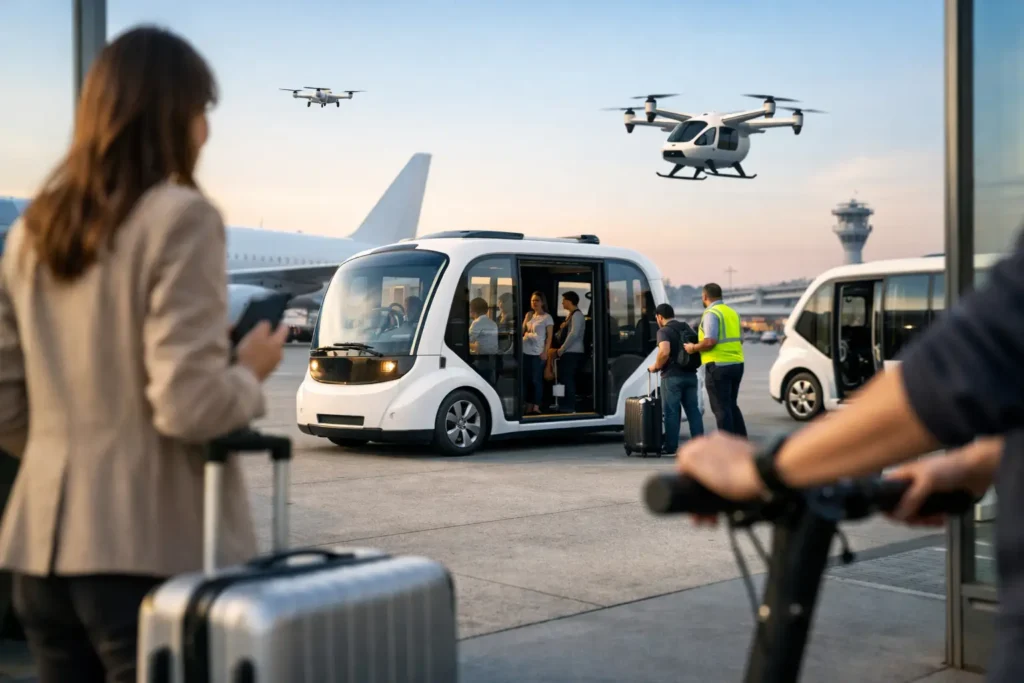
A missed flight rarely begins at the security line. It often starts much earlier: a rideshare that cancels, a driver who cannot find the right terminal, or a family trying to fit five suitcases into a vehicle built for three people. Airport mobility trends are changing that part of the trip. Travelers are moving away from improvised curbside transportation and toward planned, flight-aware service that removes avoidable uncertainty.
For passengers using Toronto Pearson, the change is especially practical. The airport is busy, terminals are structured around designated pickup areas, and road conditions across the GTA can change quickly. Getting to the airport is no longer just about booking a car. It is about choosing a transportation plan that matches the stakes of the trip.
Airport Mobility Trends Are Raising Expectations
The biggest shift is not a new vehicle type or a new app. It is a higher standard for reliability. Business travelers want to arrive ready for a meeting, not frustrated by a last-minute cancellation. Families want enough room for car seats, strollers, and luggage. Visitors want a clear pickup plan after a long flight, without standing on a curb trying to identify a stranger’s car.
Pre-booked private transportation is gaining ground because it answers those concerns before travel day. The vehicle, pickup time, passenger count, and destination are arranged in advance. A professional chauffeur has the itinerary and understands airport procedures. That control matters more than a low initial fare when a delayed pickup can affect an entire trip.
Fixed pricing is part of the same trend. Travelers have become more cautious about variable fares, surge pricing, and unexpected route changes. A confirmed rate gives passengers a clear cost before they leave home or before they board their flight. For corporate travelers managing expenses and families managing a travel budget, that clarity is not a small detail.
Flight Tracking Has Become a Basic Expectation
Airport arrivals create a different challenge from departures. A flight can land early, arrive late, wait for a gate, or take longer than expected to clear customs and collect baggage. A transportation provider that treats the original scheduled arrival time as final is not responding to how air travel actually works.
Flight-aware pickup service has become one of the most useful airport mobility trends because it supports the traveler when plans change. The chauffeur can monitor the flight and adjust for a revised arrival. SMS updates can give the passenger a direct point of contact and clear instructions for the meeting location.
That does not mean every delay disappears. Customs lines, baggage delivery, and airport traffic remain outside any driver’s control. The difference is communication. A planned transfer gives passengers someone responsible for coordinating the next step rather than forcing them to start a new transportation search after landing.
The Right Vehicle Is Part of the Service
Airport transportation used to be discussed as a simple choice between a taxi and a car. Travelers now assess the vehicle itself: luggage space, passenger comfort, cleanliness, accessibility needs, and whether the ride suits the occasion.
A solo traveler with a carry-on may prefer a luxury sedan. An executive team may need an SUV or executive vehicle with room to travel together. A family returning from an international vacation may need a van that accommodates people and baggage without stacking suitcases on laps. For wedding parties, conference groups, or multi-stop travel, vehicle capacity can determine whether the trip begins calmly or in a rush.
This is where generic, on-demand booking can fall short. An app may show a vehicle category, but it cannot always guarantee that the vehicle arriving has the space required. When transportation is pre-arranged, passengers can state their luggage and group requirements upfront. The provider can assign a suitable vehicle instead of leaving the decision to chance.
Airport Curbs Are Becoming More Controlled
Airport roads and curbside areas were not designed for endless, uncoordinated pickup activity. As passenger volumes rise, airports are placing more emphasis on designated commercial zones, controlled pickup procedures, and authorized drivers. This affects the passenger experience directly.
A driver with airport knowledge knows where pickups are permitted, how terminal procedures work, and how to communicate a meeting point that makes sense. That reduces the familiar post-flight problem of walking outside, checking multiple app messages, and wondering whether the driver is circling or waiting in the wrong place.
For travelers, the practical lesson is simple: confirm how the pickup will work before booking. Ask whether the chauffeur tracks the flight, where the meeting point will be, and how updates will be sent. A vague answer can lead to curbside confusion when you are tired, carrying bags, or traveling with children.
Premium Service Is Becoming More Operational
Luxury still matters to many airport travelers, but the definition has changed. A polished vehicle is welcome. Yet a clean interior means little if the chauffeur is late, the booking details are incorrect, or the fare changes after the ride.
The new standard for premium airport mobility is operational discipline. It includes licensed and insured chauffeurs, confirmed reservations, clean vehicles, realistic pickup timing, direct communication, and a provider familiar with airport access rules. These details are not glamorous, but they protect the passenger’s time.
This distinction is particularly relevant for early departures. A 5:00 a.m. airport pickup leaves little room for recovery if a ride does not arrive. Pre-booking with a professional service gives travelers a documented reservation and a defined plan, rather than hoping enough drivers are available when demand is low.
Sustainability Will Matter, With Practical Limits
Lower-emission vehicles are becoming a larger part of airport transportation decisions. Travelers and corporate travel managers increasingly ask about fuel-efficient fleets, hybrid options, and electric vehicles. Airports are also under pressure to reduce congestion and vehicle emissions around terminals.
The trade-off is that sustainability cannot come at the cost of range, luggage capacity, weather performance, or charging reliability. A vehicle that works well for a short urban trip may not be the best choice for a longer airport transfer from Pickering, Ajax, Markham, or another GTA location. The right approach is practical: use efficient vehicles where they suit the route while maintaining dependable options for every passenger and itinerary.
Shared transportation can reduce the number of vehicles on the road, but it is not ideal for every traveler. It may add stops, lengthen travel time, and complicate airport schedules. Private service remains the stronger choice when timing, privacy, luggage, or a direct route is the priority.
What Travelers Should Do Differently
These trends point to a better way to book airport transportation. Start with the flight, not the car. Consider the departure time, airline check-in requirements, terminal, passenger count, luggage, and the traffic pattern from your location. Then choose a service level that fits the consequences of being late.
For an important business flight, international departure, family trip, or late-night arrival, pre-booking is usually the safer decision. Confirm the total price, vehicle type, flight-monitoring process, and communication method. If your return flight arrives after a long journey, make sure the pickup instructions are clear enough to follow without guesswork.
Airline Limo Pearson is built around that level of preparation: pre-booked airport transfers, fixed rates, flight-aware pickup coordination, and professional chauffeurs who understand the demands of Pearson travel. The goal is not simply to provide a ride. It is to make the ride one part of the trip you do not have to worry about.
The most useful travel upgrade is often the least dramatic one: a confirmed car, the right amount of space, a chauffeur who arrives as planned, and no last-minute scramble at the curb. Book with those basics in place, and your airport day starts under control.