
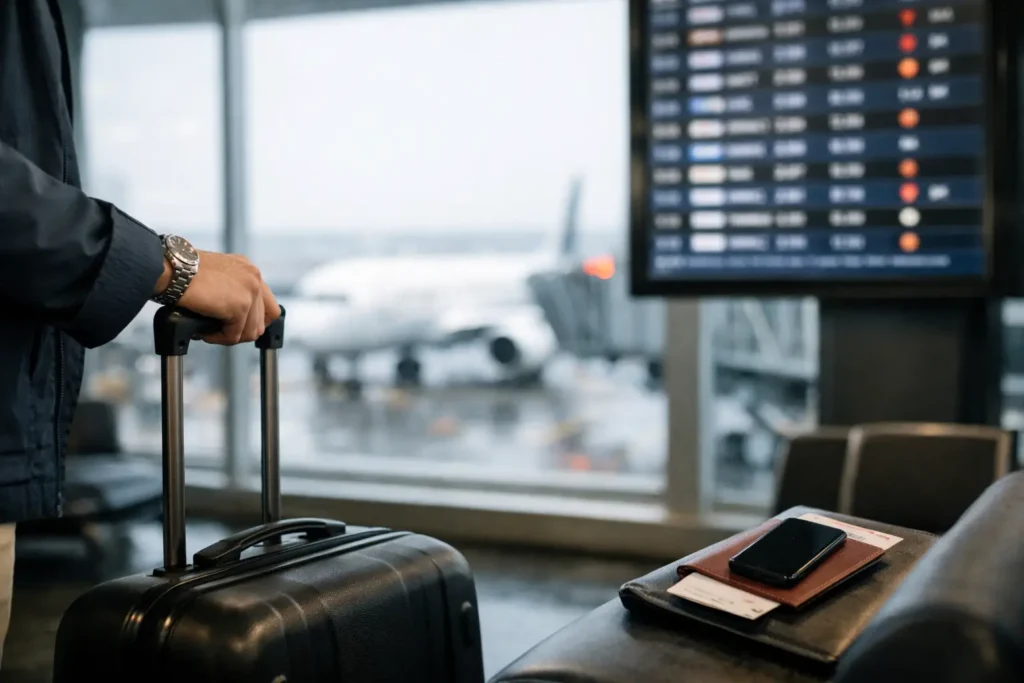
A delay can change a carefully planned travel day in minutes. A gate time moves, a connection becomes uncertain, and the person meeting you at the airport needs an answer. When travelers ask what happens with delayed flights, the practical answer is that it depends on why the delay occurred, how long it lasts, and whether you are departing, connecting, or arriving at your destination.
The best response is not to wait for announcements alone. Check your airline app, confirm your new flight status, protect any ground transportation reservation, and give yourself room to adapt. Delays are frustrating, but a few fast decisions can prevent a delay from turning into a missed meeting, an expensive overnight stay, or an anxious wait at the curb.
What Happens With Delayed Flights at the Airport?
Once a flight is delayed, the airline typically updates the departure time through its app, text alerts, airport displays, and gate announcements. The listed time may change more than once, especially when the airline is waiting for an incoming aircraft, a crew, weather clearance, or air traffic control approval.
Do not assume the first delay estimate is final. If your flight is delayed by 30 minutes, your boarding time may still remain close to the original schedule. In other situations, a one-hour delay can become several hours as aircraft and crew schedules shift throughout the day.
For departures, stay near the gate once boarding could begin. Airlines occasionally recover time, switch gates, or call passengers earlier than expected. Keep your phone charged, turn on airline notifications, and save screenshots of confirmed delay notices if you may need to request reimbursement or make an insurance claim later.
For arrivals, a delayed flight affects more than your landing time. It can shift baggage delivery, customs clearance, terminal pickup arrangements, and the availability of onward transportation. At Toronto Pearson, an international arrival may still need considerable time after touchdown for deplaning, immigration, baggage collection, and customs.
Why the Reason for the Delay Matters
Not every delay is handled the same way. Airlines generally distinguish between issues within their control and issues outside their control. Mechanical problems, staffing issues, or certain scheduling disruptions may be treated differently from severe weather, airport congestion, security events, or air traffic restrictions.
That distinction can affect whether the airline offers meals, hotel accommodations, or other assistance. It can also affect eligibility for compensation under the rules that apply to your itinerary. Flights departing Canada or operated by certain carriers may fall under Canadian air passenger protection requirements, while US and international rules may apply differently depending on the route and airline.
Ask the airline directly for the stated cause of the delay. Be polite, but specific: Is the delay weather-related, crew-related, maintenance-related, or caused by an incoming aircraft? Request that explanation in writing through the app, email, or a customer service agent if possible.
You should also ask what the airline will provide if the delay extends. Depending on the circumstances, that may include rebooking, meal vouchers, hotel arrangements, transportation to a hotel, or instructions for submitting a claim. Do not spend money based on an assumption that it will be repaid. Confirm what is authorized and keep every receipt.
Rebooking, Connections, and Checked Bags
If a delay puts a connection at risk, act before your first flight lands. Open the airline app and look for self-service rebooking options. If they are not available, call the airline or use the airport service desk. The fastest solution is often not the main line at the gate, where every affected passenger is waiting.
When requesting a new itinerary, look beyond the next available flight. A later flight with a realistic connection may be better than a tight route that leaves you stranded in another airport. If you have an important event, meeting, cruise departure, or same-day regional transfer, tell the agent. They cannot always prioritize your schedule, but they may identify alternatives that do not appear in the basic rebooking options.
Checked baggage usually follows your updated itinerary when the airline rebooks you. Still, ask whether your bags have been retagged, particularly if you have changed airlines or airports. If you voluntarily choose a different flight or separate your itinerary into multiple bookings, baggage handling can become more complicated.
For carry-on essentials, plan as though you could be delayed overnight. Keep medication, identification, chargers, a change of clothes, important documents, and valuables with you. A checked suitcase is not a reliable place for anything you may need during a disruption.
Protect Your Airport Pickup Before You Land
A delayed arrival is where a prearranged, flight-aware car service makes a real difference. Friends and family may be circling the terminal for hours. Rideshare availability can fluctuate, and a late-night delay can leave travelers standing outside with luggage, children, or work equipment while they search for a ride.
If you have booked private airport transportation, contact the provider as soon as the delay becomes meaningful. Share the flight number, not just the revised arrival time. Flight numbers allow a professional dispatcher to follow the actual flight movement rather than relying on an estimate that may change again.
There is an important difference between tracking a flight and waiting indefinitely without a plan. Confirm how the service handles long delays, cancellations, diversions, and changes in arrival airport. Ask where your chauffeur will meet you and whether the pickup time is adjusted for the time required to clear the terminal.
At Airline Limo Pearson, pre-booked airport transfers are coordinated around flight status and direct passenger communication. That means less guesswork after a long trip: no standing on a curb refreshing an app, no negotiating a last-minute fare, and no wondering whether a driver understands the terminal pickup process.
Travelers should still send an update when possible. Flight tracking shows the aircraft’s status, but it cannot always account for a missed connection, a canceled itinerary, a passport-control delay, or a decision to stay overnight. A quick message keeps the pickup plan accurate.
If Your Flight Is Canceled Instead of Delayed
A cancellation requires a different decision. Your original airport pickup may no longer be needed that day, and your priority becomes securing a replacement flight or deciding whether to abandon the trip. Check the airline app immediately, then speak with an agent if the offered rebooking does not work.
Before accepting an option, consider the complete trip. A flight that arrives at midnight may require a new hotel, a changed airport transfer, and a missed event the following morning. If an alternative airport is offered, confirm the distance to your final destination and the cost of getting there. A low-fare solution can become expensive when ground transportation and lost time are added.
If you decide not to travel, ask about refund options and whether unused portions of your itinerary will be canceled automatically. Never simply skip one segment of a multi-flight ticket without understanding the consequences. Airlines may cancel the remaining itinerary when a passenger misses the first leg.
A Calm Plan for the Next Delay
Delayed flights are not always preventable, but the confusion around them often is. Keep the airline app active, monitor the flight number, protect your connection early, and save records of every major update and expense. If you have airport transportation booked, communicate promptly and confirm the pickup plan rather than assuming the original time still applies.
The goal is not to control the weather or the airline’s operations. It is to keep the parts of your trip that you can control organized, confirmed, and ready when the gate finally opens.